About MM Plumm
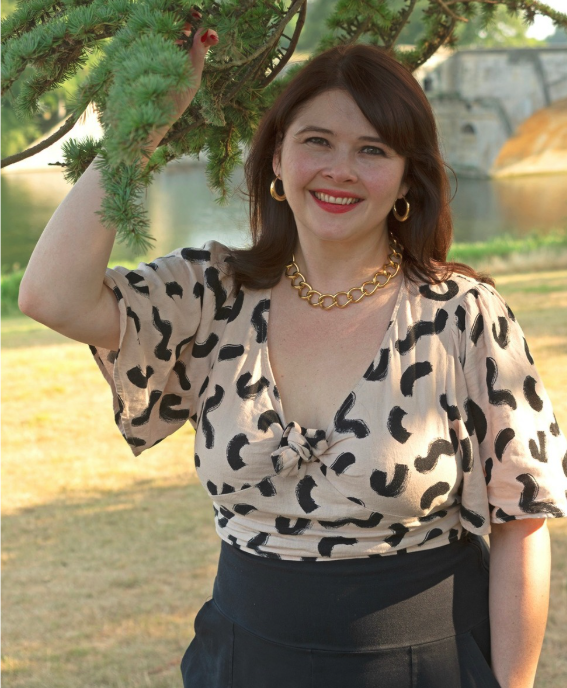
Photo by Pete Seaward
Morgan began painting during a time of long illness and recovery continued to develop following the death of her mother, when painting became both outlet and lifeline. Her canvases are filled with botanical forms that spill over their vessels and beyond the frame, imagined plants that embody chaos, control, and the unchecked growth of untended life.
You can see more art (and chaotic commentary on pretty much everything) from Morgan at @mm_plumm on Instagram.
If you are interested in purchasing a piece from this exhibition, please reach out to mmplumm@gmail.com
Please note that pieces will be sold as-seen and prices do not include shipping or handling.
The Optimists: Information on artworks by MM Plumm
Anachronism Overgrowth
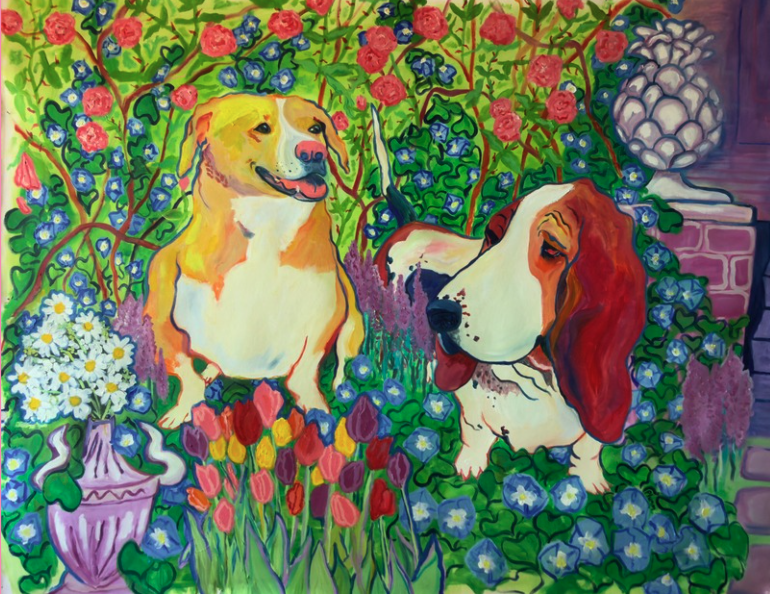
This is probably my most personal work, a collection of familial symbols existing all together at a point in time that never could have existed.
The piece features my brother’s dogs in my late mother’s front garden, surrounded by flowers symbolising or existing in her life:
Tulips and lavender, her favourite flowers
A blanket of morning glories—-she once planted 50 morning glory plants around the perimeter of the house and over that year, they grew over the garden like a lawn, climbed the house to the 2nd story and blanketed the ancient pine tree in the garden until it choked. It was a beautiful display every morning that was, like many things in her life, much too much of a good thing
Daisies, commemorating her two beloved basset hounds, both named Daisy, in an unusual piece of pottery that I briefly saw and have always regretted not taking from her house following her passing
Roses, which she always grew and give attention to when she could
When I was little, she explained that the pineapple statues that flanked the porch stairs represented a welcome, but behind this scene, the porch blurs, shifting into the dark memory of a foreboding house that eventually became a cocoon.
La Tempesta, first landscape
150 x 140 cm
Oil on unstretched canvas
£1000
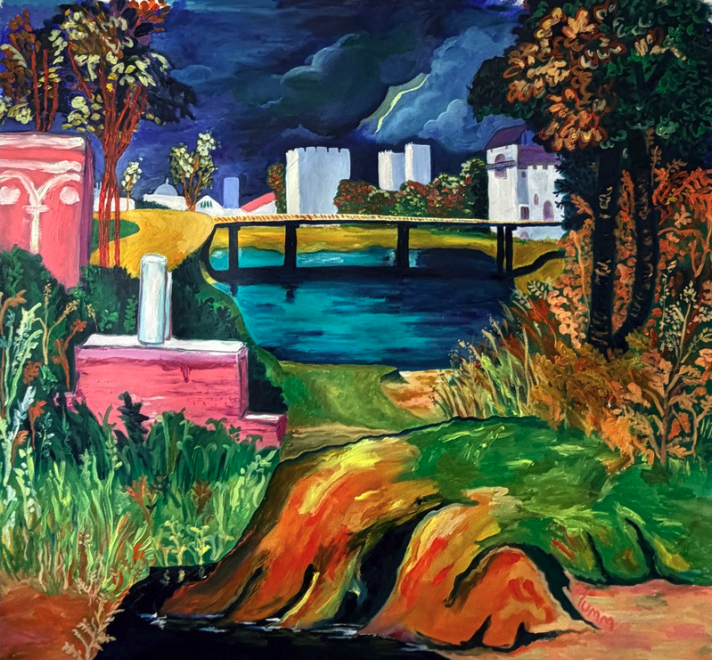
This piece is a meditation on the origins of La Tempesta by Venetian Renaissance painter Giorgione, which hangs in the Gallerie dell'Accademia in Venice. Lacking an explicit religious or mythological theme, it is widely considered to be one of the most enigmatic paintings in western art, and is one of the very first paintings to be called a ‘landscape.’
Giorgione’s painting contains three human figures: a man on the left side of the painting and a woman nursing an infant on the right, but x-ray scans show an earlier version of the painting contained a nude woman where the man now stands. Earlier still, Giorgione broke the trend of leaving blank space for human figures, painting the entire landscape first and inserting the figures as a secondary element; my goal here was to strip back the moment in that painting and reimagine its original idea.
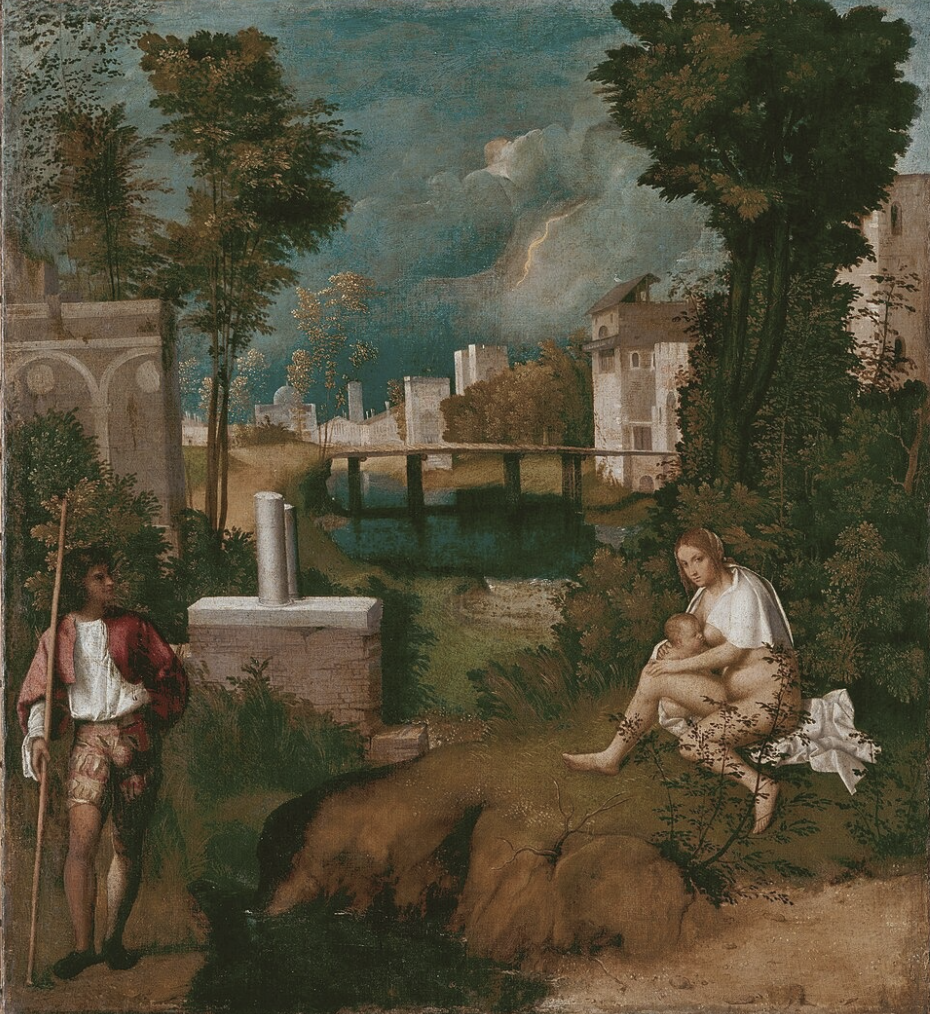
La Tempesta by Giorgione
1506-1508
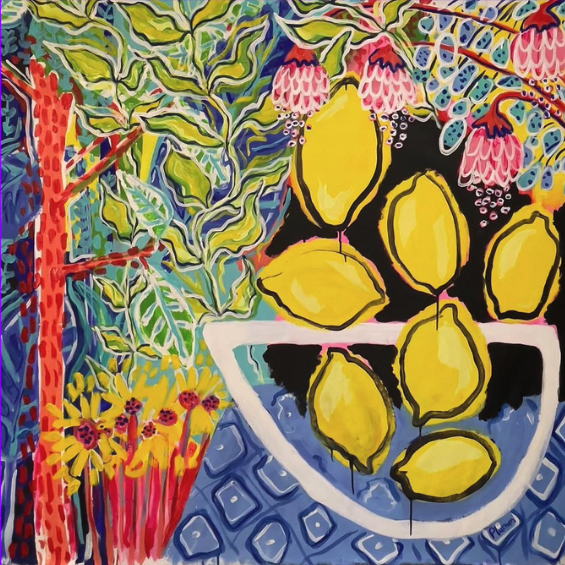
Seven Lemons
I have been told that my paintings are cheerful and optimistic, but the colours I use, the lines on lines on lines--it’s all about grimacing through a sinister experience, distraction, boundaries and conveying the changes in my sight that have happened since getting Long Covid. I’m working towards making my use of bright colour feel more like panic--with this painting, I want the eye only to be able to rest on the lemons and the Mars black mixed with blue pigment powder that threatens to corrode the foreground.
During the pandemic I learned from social media that you can eat certain Amalfi lemons like an apple—just bite into it, skin and all. I became a little obsessed with this idea, and fruit bowls kept showing up in my pieces around that time. I have since been to Italy and tried it and, wouldn’t you know, the right lemon peels are sweet and delicious.
Control Overgrowth
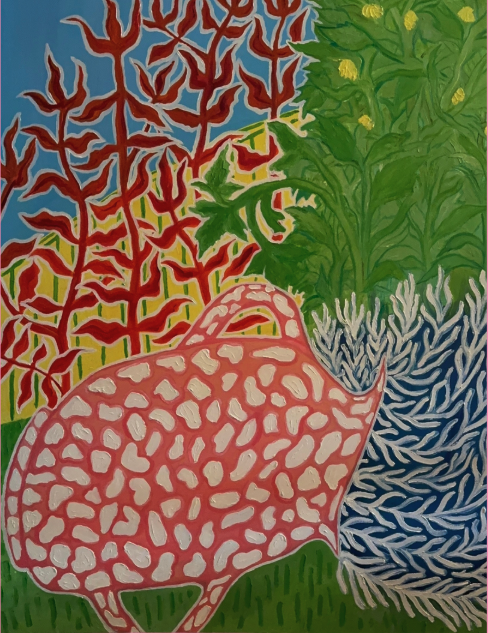
The overgrowth pieces come strictly from my relationship to the process of creating the piece, all within the context of being housebound either physically or emotionally. This piece is a bizarro-world corner of our small garden, rigidly ordered across defined colour fields in rough quadrants, creating thick boundaries that I want to avoid but always find myself coming back to. I love plants but hate touching dirt, fear reching my hand into a tangle of vines, feeling rot. This garden scene is vibrant but lifeless, clean but fruitless.
Revision Overgrowth
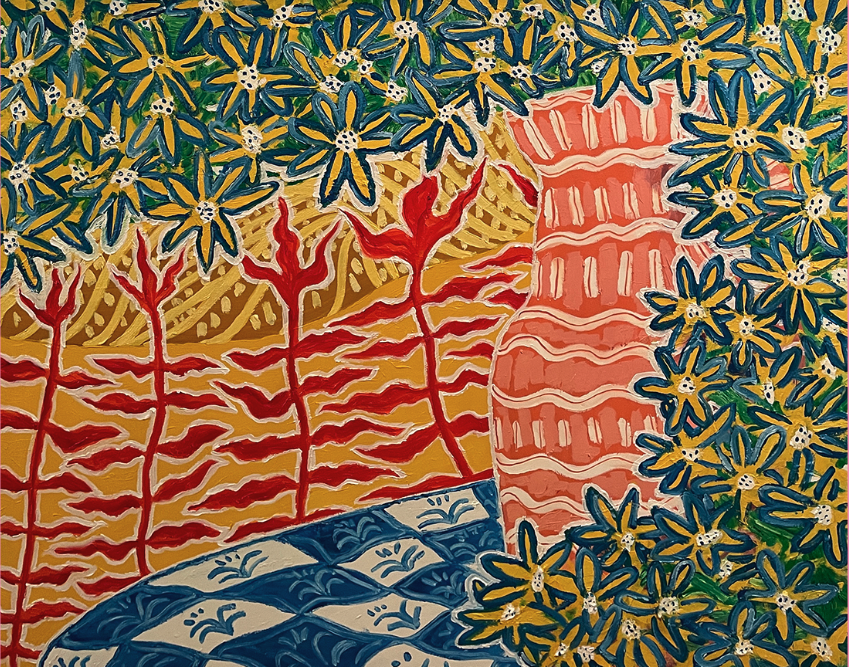
It took a lot of effort to wrangle this painting into shape, and the impasto here is less about the technique and more about the 12 iterations this went through before settling into its final form.
Maybe Everything Will Be Okay, But Not Yet
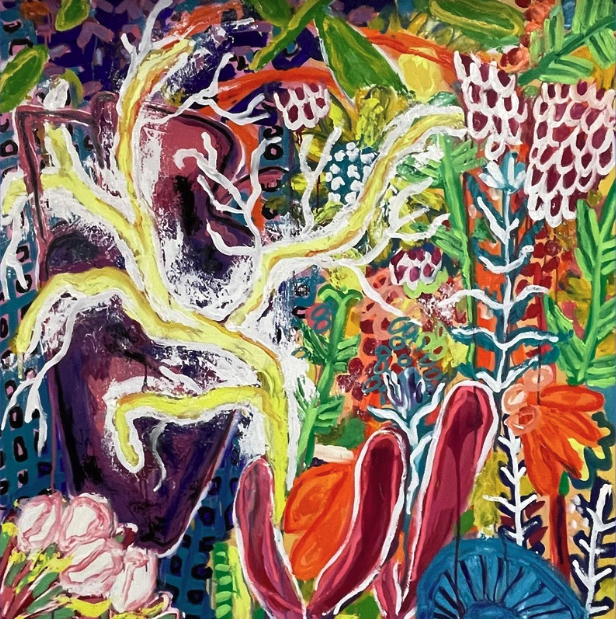
As I develop the more frantic elements of my practice, the edges of everything and all my shapes get looser. I feel like I left the energy that created this piece inside of it. An electric shock runs through this garden scene, weaving through an urn.
Resource Overgrowth
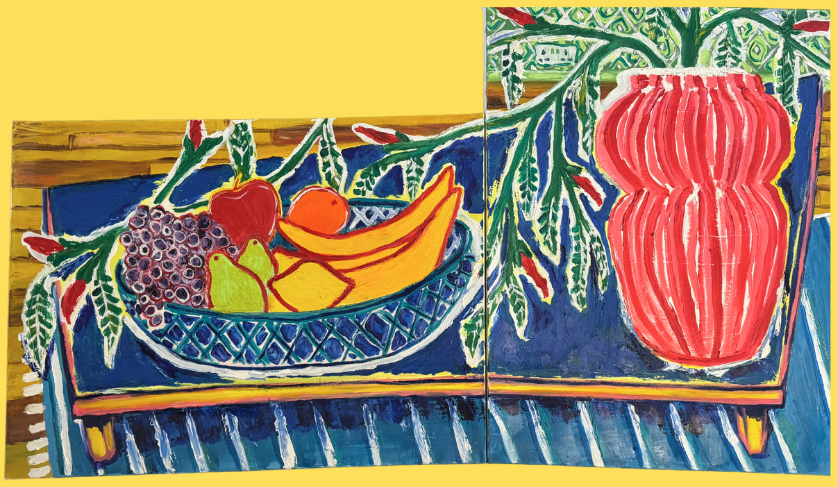
When the art supply store sends you two wonky-shaped canvases, strap 'em together and make wonky-shaped lemonade.