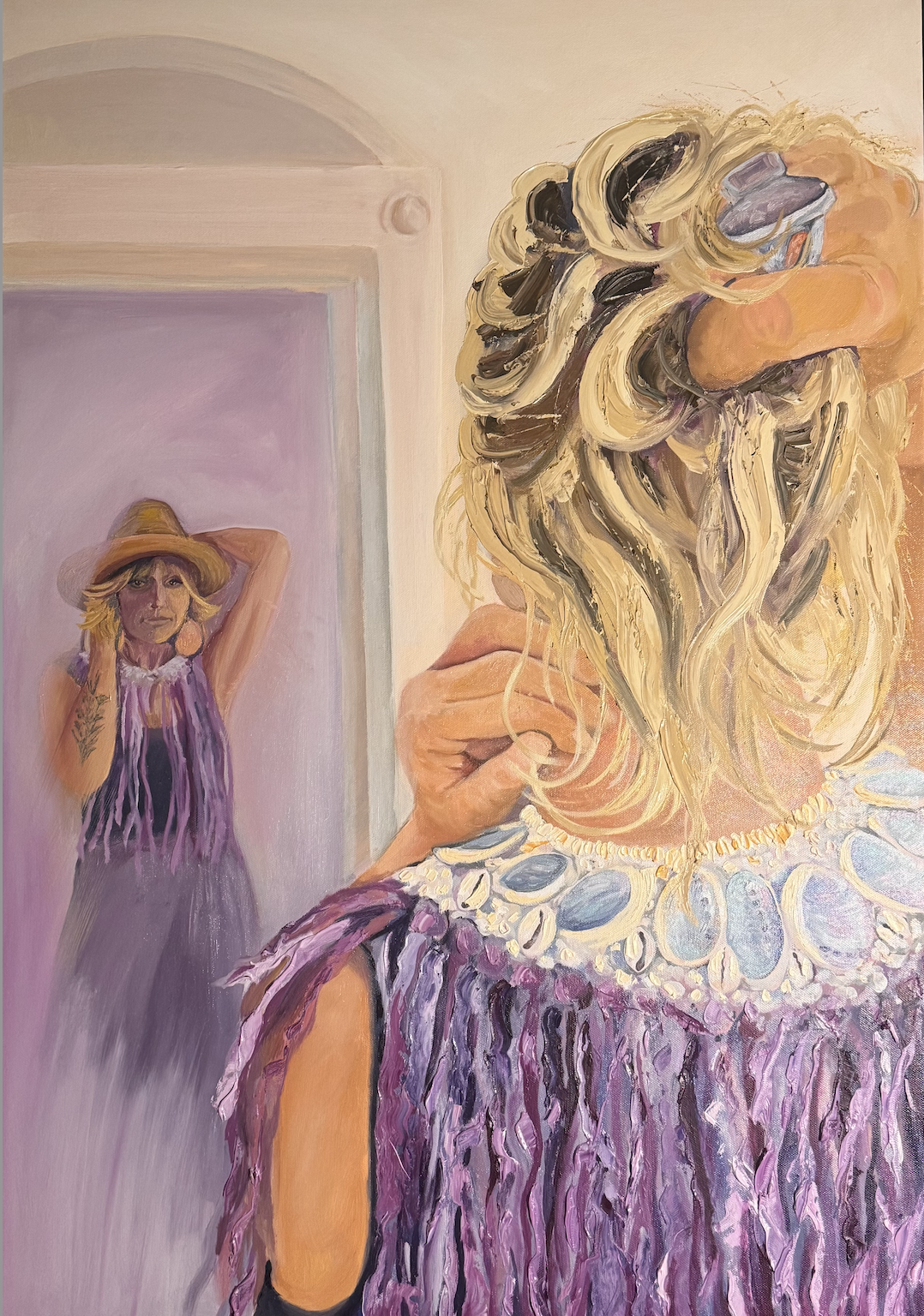
“A Reflection of Oneself”
Nina Carrington, founder of Of Woodstock and the Woodstock Artisan Collective, is a maker and creative spirit whose world brings together craft, style, spirituality, community and a love of reinvention.
Nina Carrington (Nina of Woodstock) is a friend, maker and creative presence in Woodstock. She runs the Artisan Collective and has her own studio, but creativity for Nina has never really been a job or a single discipline. It seems to be something she has always done, instinctively. “I was always creating,” she told me. “I’ve always loved dressing up.” Making, dressing, collecting, arranging, scent, flowers, interiors — they all seem to be different expressions of the same impulse.
There is a strong femininity to Nina, but it isn’t a fragile one. She told me that she loves being woman, is very remonatic and describes herself as “gentle but strong.” As we talked, it became clear that these things aren’t superficial to her. Clothes, objects and adornment are part of how she expresses herself and how she connects the physical world with something less tangible.
Nina talks about creativity in an intuitive, almost spiritual way. “I listen to my intuition a lot,” she says. “I always feel it’s more of a download.” And then, laughing but also completely meaning it: “I definitely say I’m a witch.” There is a sense that she doesn't necessarily begin with a plan and execute it. She listens, gathers, combines and responds.
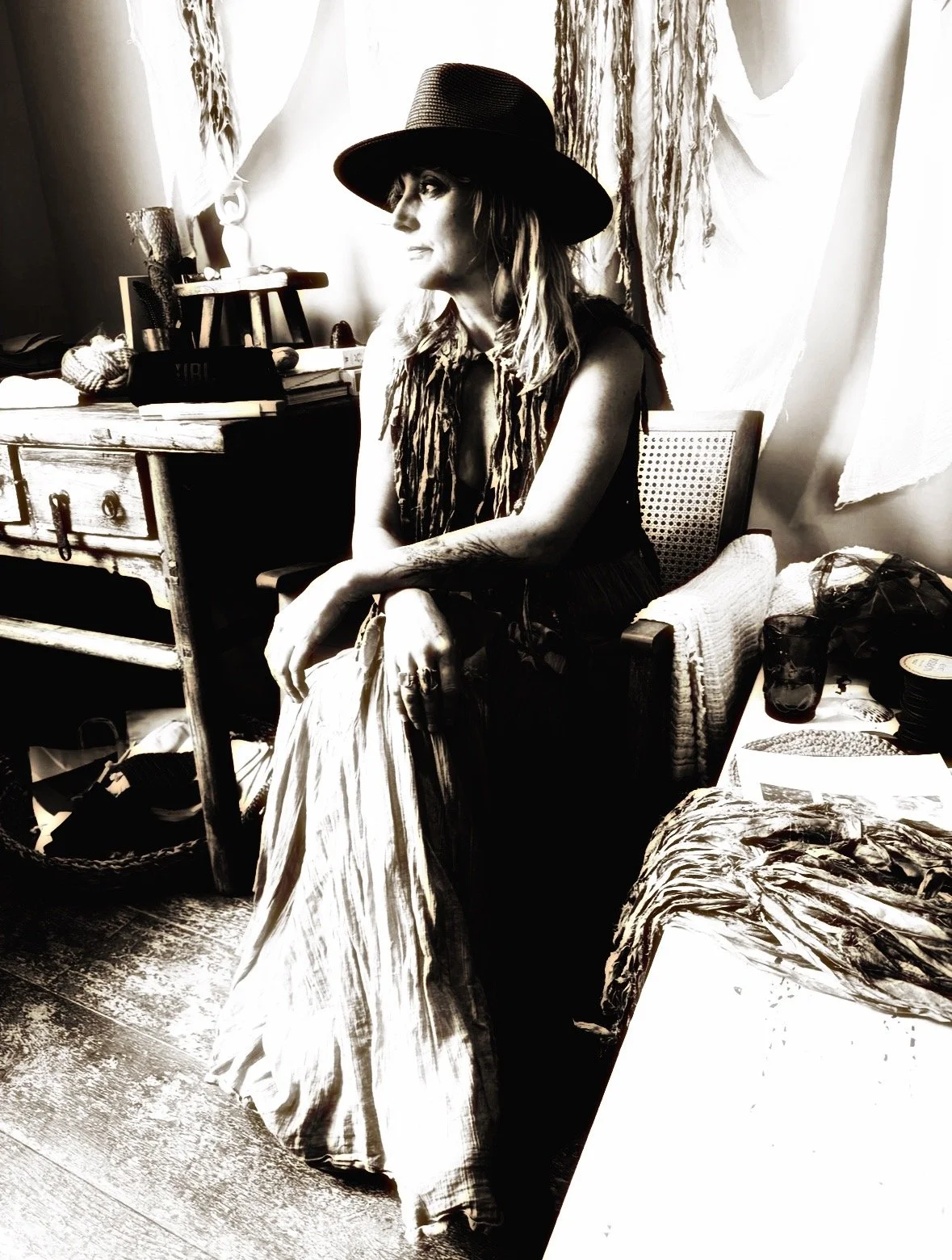
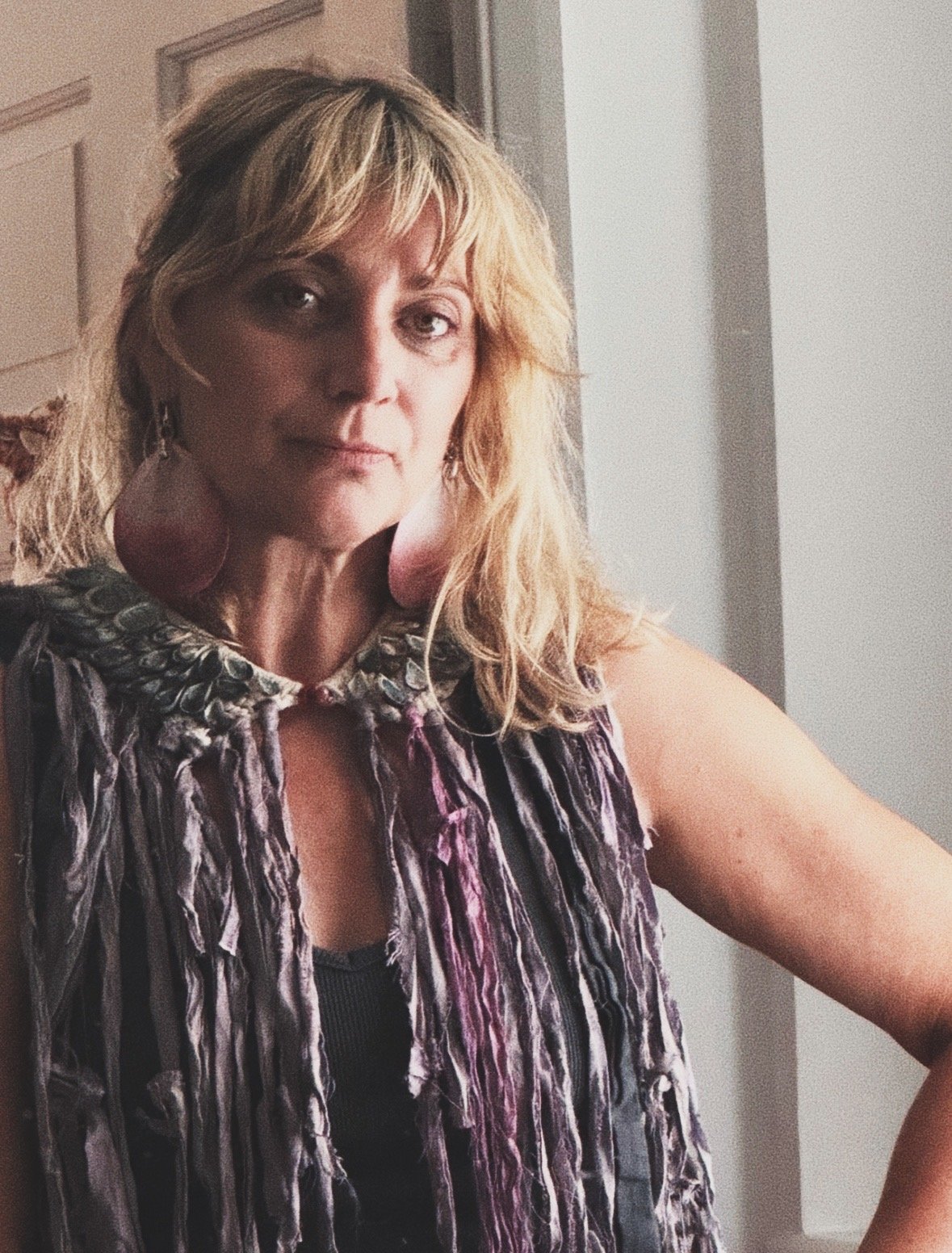
That way of making is particularly evident in her amulets, which bring together sari fabrics, shells and collected materials. They are beautiful objects, but for Nina their value is also in the intention with which they are made. “When somebody buys it, they’ve got a piece of my heart in there.” It was important that the amulets appeared prominently in the portrait: not simply as jewellery, but as something Nina has made with her own hands and invested with herself
Scent has become another important part of Nina’s creative life, and its beginnings came from a much more difficult place. “Through grief... scent became really important to me,” she told me. The making and burning of incense became a ritual requiring concentration and presence: “You have to be completely present.” She talks about scent as something capable of shifting how we feel physically as well as emotionally: “It calms your nervous system.” What emerged from grief became a creative practice, a way of making something sensory and restorative for herself and eventually for other people.
There is also a lovely sense in Nina of a woman increasingly comfortable with herself. We talked about getting older and menopause not simply in terms of loss, but liberation, reaching an age when some of the expectations placed upon women begin to matter less. Nina put it rather more succinctly: “We don’t tolerate bullshit anymore.” That combination of softness and certainty, romance and strength, vulnerability and self-possession became important to me as I thought about her portrait.
The objects Nina wears carry quieter pieces of her life. On one hand is her wedding ring; on the other, a ring given to her by her husband, Dave, to mark 30 years together. Her tattoo is utterly Nina, delicate yet bold, nature inspired. The lilac skirt is itself an act of reinvention, something Nina had owned and then cut and reworked rather than discarding. Her amulet sit heavily around her neck. These aren't symbols I invented for Nina; they're fragments of the life she brought into the studio where we collaborated on her Portrait Story.
And then there is the hat. Nina was very clear that she wanted to wear one. We talked about head-covering and spirituality — the idea of protecting the crown, containing energy and deciding how open or exposed you allow yourself to be. That conversation stayed with me, but ultimately I chose not to put the hat on the Nina closest to us. Instead, it appears on her reflection.
The mirror came from a moment during our sitting when Nina looked at herself. Suddenly there were two Ninas: the physical woman in front of me and the woman looking back. In the foreground, Nina is turned away from us. Her hair is lifted, her neck and arm exposed; we are incredibly close to her. The paint here is deliberately tactile and textured — hair, skin, fabric, shells and amulets almost demanding to be touched. In the mirror, she changes. Her reflection is softer, quieter and more ethereal. She wears the hat and looks back at us from beneath its brim.
That contrast seemed to contain so much of what we'd talked about: gentle but strong; exposed but protected; physical but spiritual; the woman other people see and the woman who sees herself.
Nina's visual world is also very different from mine. I instinctively reach for saturated, sometimes almost fluorescent colour; Nina dresses and surrounds herself in a much more muted, earthy palette. It mattered that I didn't simply take Nina and make her conform to my aesthetic. The dusty lilacs, soft pinks, creams and earthier browns came from her. The painting still has my marks and my love of colour and texture, but its atmosphere is quieter.
And perhaps that is what I find most interesting about Nina. She is someone who is continually making and remaking - objects, clothes, spaces, rituals and, in some ways, herself. Yet none of it feels like becoming somebody else. If anything, her story seems to be about stripping away what no longer matters and becoming increasingly comfortable with what was there all along.
Nina’s thoughts on her Portrait Story
How was the experience of the creation of your Portrait Story?
I Ioved the relaxed and informal approach. She made me feel at east as we talked about my life and my creative approach, which is always a lovely conversation to have. As we talked, and she sketched away, I felt quite vulnerable…..what would she see in me? what would she paint? It felt like a collaboration though. Thoughtful and creative.
Get In Touch
If you're interested in purchasing this painting, or commissioning your own Portrait Story, please get in touch.